







Caleb Chan
calebed.me
AVAILABLE

FORWARD DEPLOYED EDUCATOR

Designing education for agency

I help education teams turn their values into working systems. That means clear roles, simple routines, and humane digital tools that make it easier to share power with students without losing coherence. My work sits between leadership, operations, and product thinking, so that what we design together is both principled and usable in real schools.

Caleb Chan Headshot
Caleb Chan
01 // DO

Work & Learn

2023 — Present
Bangkok
Implementation & AnalyticsSingapore International School of Bangkok (SISB)
On‑site diagnostics, analytics, and lightweight tools for running five campuses as one system. That has meant building cross‑campus review rhythms, shared dashboards, and small workflow apps directly from teachers’ and parents’ pain points.
2022 — 2023
Singapore
Higher Education Policy & ImplementationMinistry of Education
Funding architectures, governance routines, and safeguarding policy for a national university ecosystem. I worked with institutional leaders to stress‑test options, translate trade‑offs into concrete commitments, and use monitoring data to spot implementation risk early.
2016 — 2021
Singapore
Student Experience Systems & WellbeingPublic School
Care, leadership, and intervention systems for a whole secondary school. I led the design of an Ecosystem of Care that joined up tutor time, peer support, restorative responses, and data‑informed casework so that vulnerable learners were noticed sooner and student leadership was built into everyday school life.
MSc Education FuturesUniversity of Edinburgh
Policies, systems and the way forward in education
BSc (Hons) Applied MathematicsNational University of Singapore
Problems, proofs, and optimal ways to decide
Postgraduate Diploma in EducationNanyang Technological University
Pedagogy, principles and ways to learn
02 // AM

Personal Axioms

AXIOM 01

Human Judgment With Digital Support

AXIOM 02

People Outcomes for System Outcomes

AXIOM 03

Student Agency for Student Learning

04 // BUILD

Solution Stack

Solutions I've built to optimise both schools and individuals.

Values Crucible
ACTIVE
TOOL // 01
LeadershipValuesPersonal Growth

Values Crucible

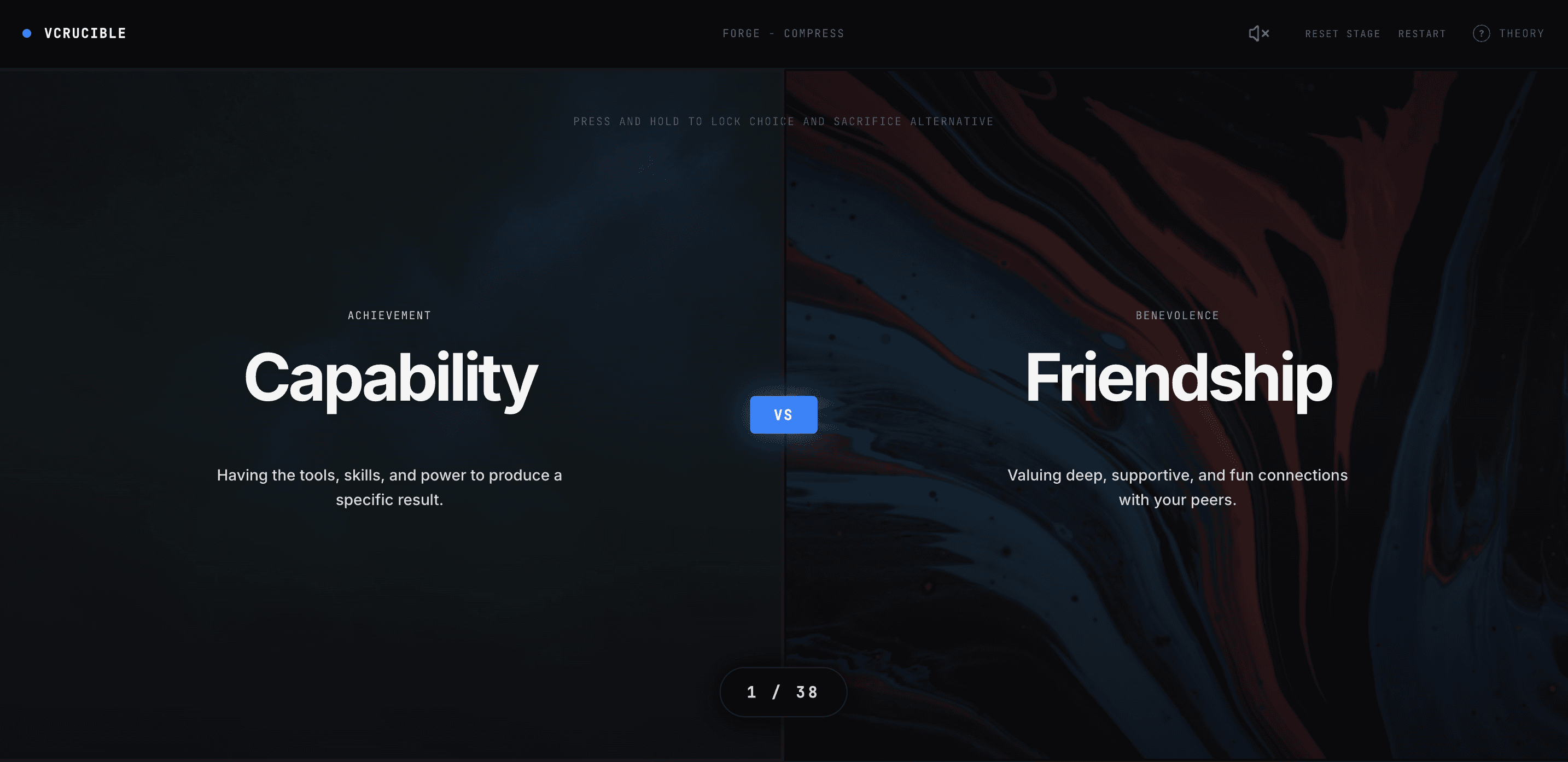
Most core values exercises are completely pointless. People pick nice-sounding words like "Integrity" or "Autonomy" off a generic list, stick them in a drawer, and never think about them again. Because these words are never defined or tested, they fall apart the second real life happens—leaving you stuck and conflicted when you actually have to make a tough call.

The Values Crucible is a digital workspace that challenges you to back up your words. Instead of letting you coast on vague ideas, it creates safe, realistic trade-offs based on your actual work and life. It forces you to figure out how your top values work together as a team, leaving you with a clear, unshakeable 35-word rule of thumb for making hard choices fast.

People Impacted17 and counting
Values Sorted 1000+
Open App
TOOL // 02
School SystemsEvent OperationsGoogle Apps Script

Queuing System & App for Parent Teacher Meetings

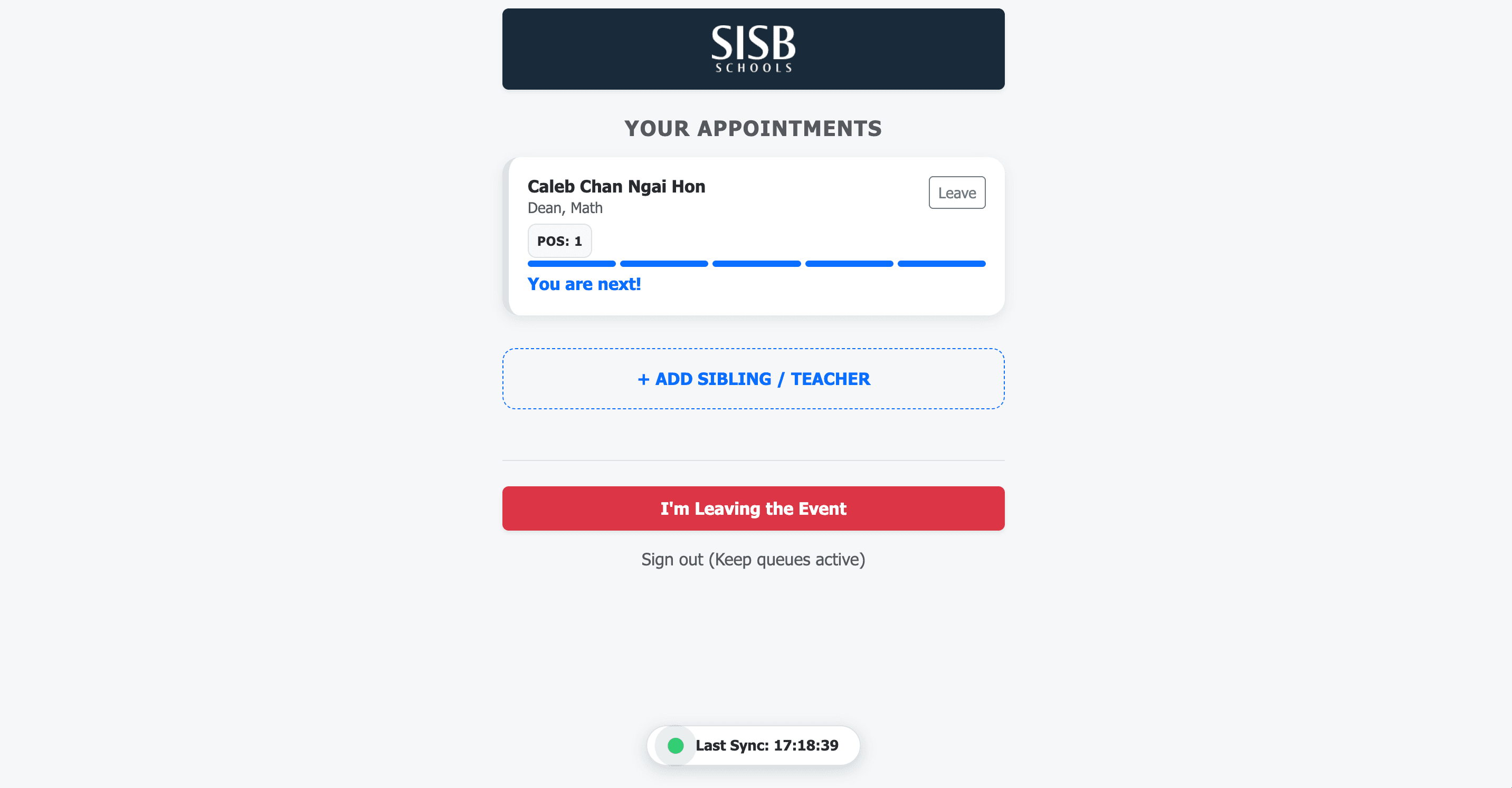
During campus‑wide parent‑teacher meetings, parents and teachers operate with zero shared visibility of queues. Without a real‑time system, parents crowd corridors, teachers lose minutes managing lines instead of learning conversations, and the school cannot control flow across dozens of classrooms.

Designed and shipped a serverless, real‑time web app that coordinates queues across all PTM classrooms on low‑cost Google Apps Script infrastructure. The system gives parents live queue position, teachers a consolidated console with “busy” flags, and translators a dispatch board, cutting corridor congestion, protecting parents' and teachers' time.

Parents Served~600
Teachers Served~90
Time Saved (h)~450
Open App
Queuing System & App for Parent Teacher Meetings - view 1
OPTIMISED
05 // ENVISION

Futures Exploration

Curated projects and assignments from my time at the Edinburgh Futures Institute.

Relational Data for Student Wellbeing

Social Networks against Bullying in Thai Schools

Applied Social Network Analysis and podcasting to explore how Thai students’ friendship patterns and cultural norms relate to bullying and upstanding. Network maps and interviews highlighted how krengjai and pii‑nong make bystander intervention difficult, even for students with strong values. Supervisor feedback emphasised ethical risks of mapping vulnerable students and the need for clearer indicators of change, which later pushed the Futures Project toward participatory design and low-risk routines instead of continued surveillance.

Relational Futures Pedagogy

Workshops for Voice in Hierarchical Classrooms

Drawing on co-creation and facilitation principles, this work develops a practical “manual” for student leadership workshops in Thai schools. It foregrounds power, vulnerability, and trust-building, recognising that juniors often hesitate to speak under seniors’ gaze. Techniques include co-designed ground rules, written responses before speech, transparent process logic, and clear commitments about how student contributions will be used. These design choices prioritise character and relational safety over speed, while still supporting concrete changes to routines and meetings.

Character-first Educational Utopias

Reimagining Singapore School Futures

Used Ruth Levitas' utopia as method to explore how Singapore’s high-performing school system might look if character formation, rest, and student voice were treated as core outcomes rather than soft extras. I contrasted a familiar trajectory of efficiency and ranking with preferable futures where courage, care, and relational safety are designed into everyday routines. The work sharpened my awareness of how my own Singaporean training shapes what I see as “good schooling,” and pushed me to treat systems as contestable designs instead of fixed benchmarks to export into Thailand.

Relational Approaches to Student Wellbeing

Human Library for Learning and Resilience

Proposed a “human library” where students borrow lived experiences instead of books, listening to peers and teachers tell short, honest stories about struggle, failure, and recovery. The design responds to resilience work that often emphasises adjustment and grit, but underplays relational safety and structural pressures in high-stakes schooling. By foregrounding shared stories, consent, and careful facilitation, the concept treats resilience as a collective practice of listening, witnessing, and re-signalling what counts as strength in school.

Critical Datafication in Schooling

Internal Memo on Education and Surveillance

Crafted a fictional government memo arguing for expanded learning analytics and behavioural monitoring in schools, written in a neutral bureaucratic tone that gradually revealed its assumptions. By inhabiting the role of a policy officer, I showed how language about safety, efficiency, and personalised learning can normalise surveillance, narrow views of learning, and sideline questions of student agency and consent. A short critical reflection then unpacked how such memos, if left unchallenged, risk reshaping classrooms into data extraction sites rather than spaces for character and democratic participation.

Wicked Problems in System Reform

Re-reading FSBB in Singapore

Treated Singapore’s Full Subject-Based Banding (FSBB) as a wicked problem, where equity, excellence, identity, and labour-market demands pull in different directions and resist tidy solutions. I argued that while FSBB softens the edges of streaming, it still frames students mainly as future workers to be efficiently sorted, with limited space for agency, democratic participation, or character formation. By reading policy texts alongside classroom realities, I framed FSBB as one contested future among many, and sketched what reforms might look like if they started from belonging, dignity, and relational safety rather than from optimisation alone.

Wicked Problems and EdTech Futures

Mapping the Wicked Problem of Techno-solutionism in Education

Mapped out techno-solutionism in education as a wicked problem rather than a simple design challenge. Surfaced how commercial interests, policy pressures, teacher workload, inequality, and cultural beliefs about “innovation” interact to produce recurring cycles of EdTech hype and disappointment. The group mapping activity helped me see why quick technical fixes to deep educational issues are so attractive, and why futures work needs to start from values, relationships, and context instead of from tools.

04 // CONTACT

Let's Connect

Reach out to discuss education, systems and products

DIRECT EMAILcalebchanngaihon@gmail.com