Reflection
I started thinking about this system because I saw my admin colleagues' time and focus chipped away by small, high-friction administrative tasks. When a student needs to leave campus early for an appointment, the traditional process was terribly troublesome. It involved chasing down paper forms, waiting on manual office verifications, and clogging parent inboxes with back-and-forth emails. It turned a simple life event into a bureaucratic hurdle, making the school feel more like an institution than a community. I wanted to build a tool to return that lost time and trust back to our families and staff, giving students a quiet sense of ownership over their logistics while liberating adults from manual gatekeeping.
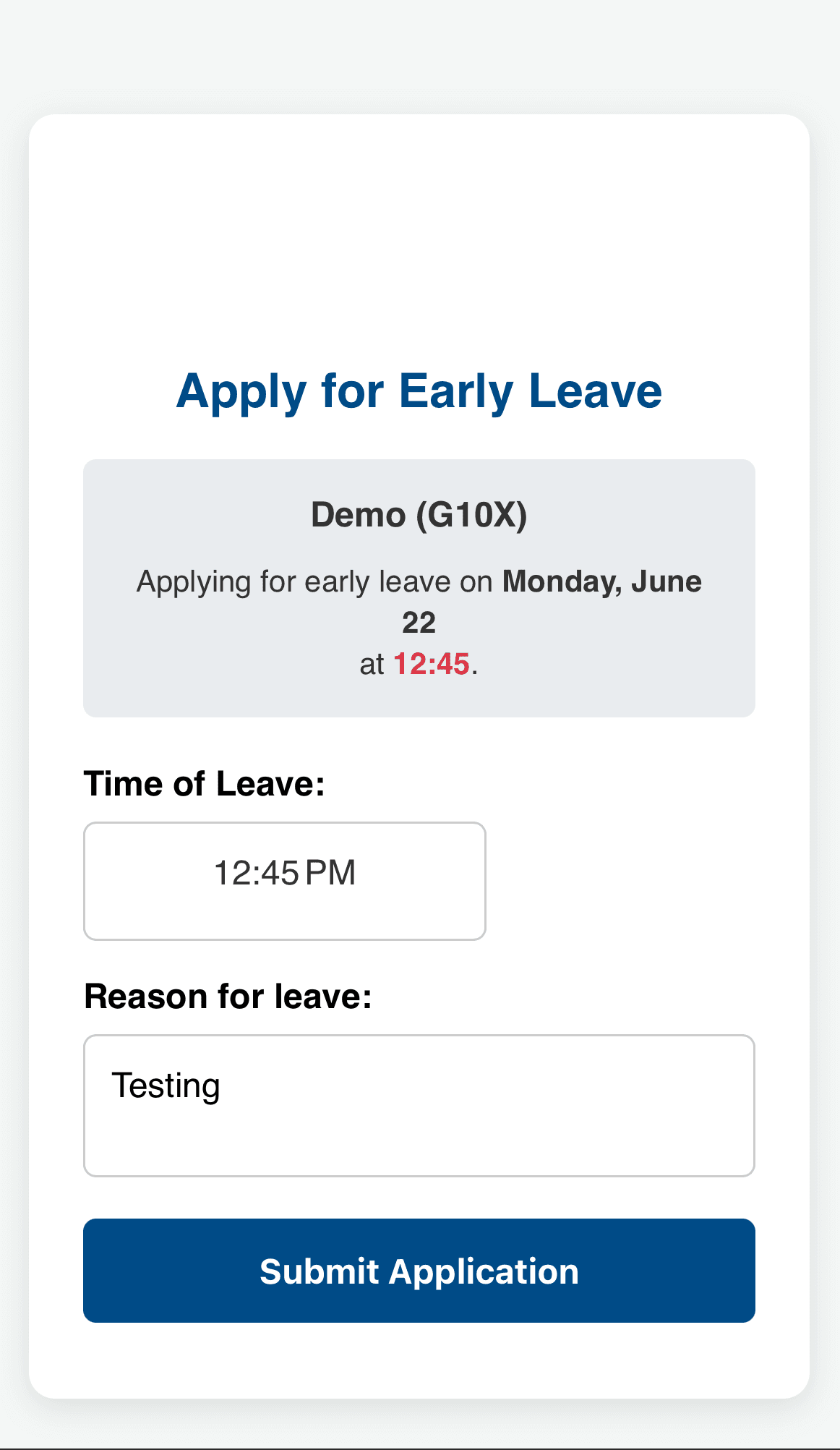
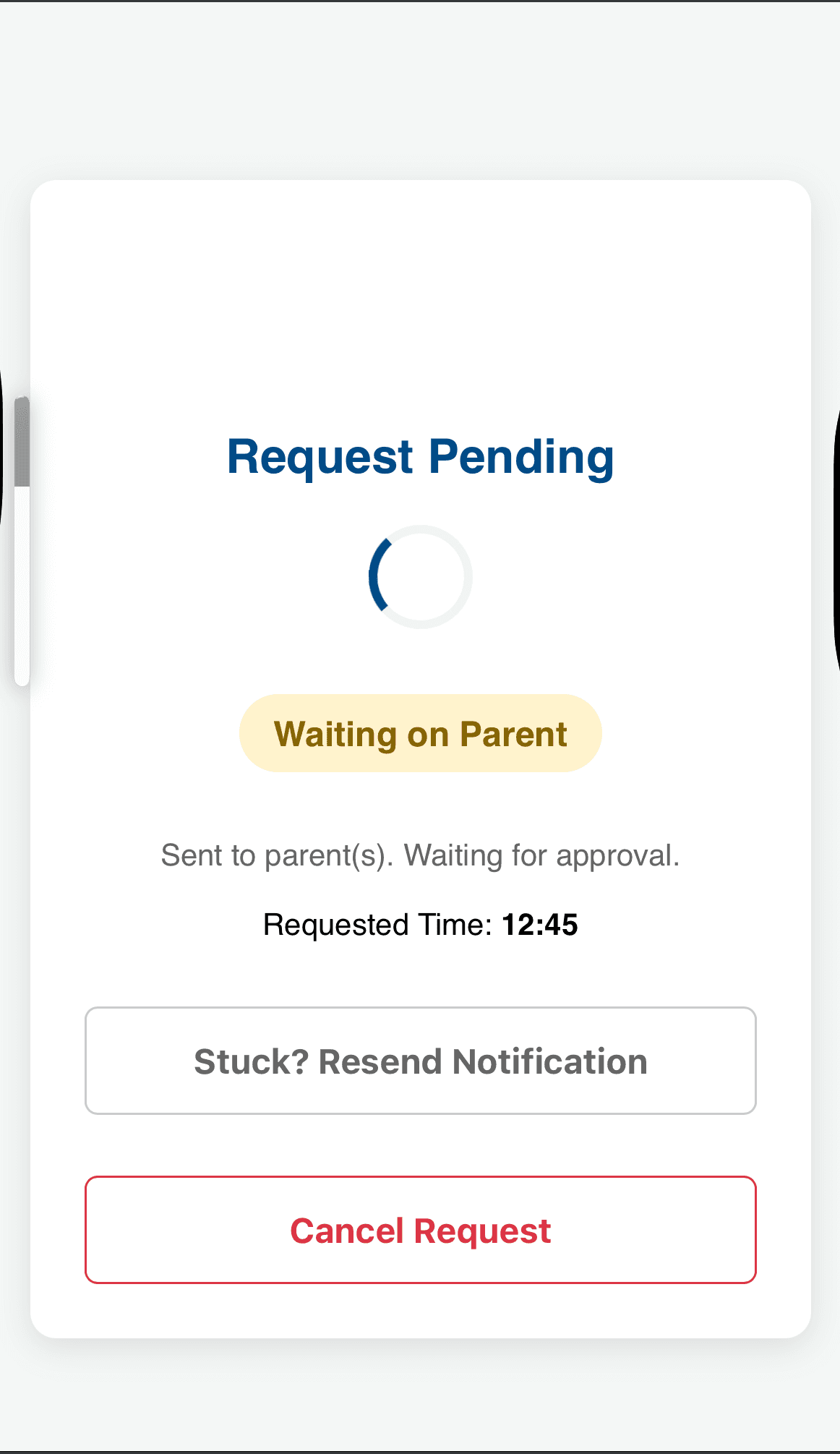
The result is a lightweight digital workflow that coordinates early dismissals gently. A student kicks off the request, which routes directly to their parent’s phone for a quick sign-off, clears through the main office, and generates an active digital pass for the front gate.
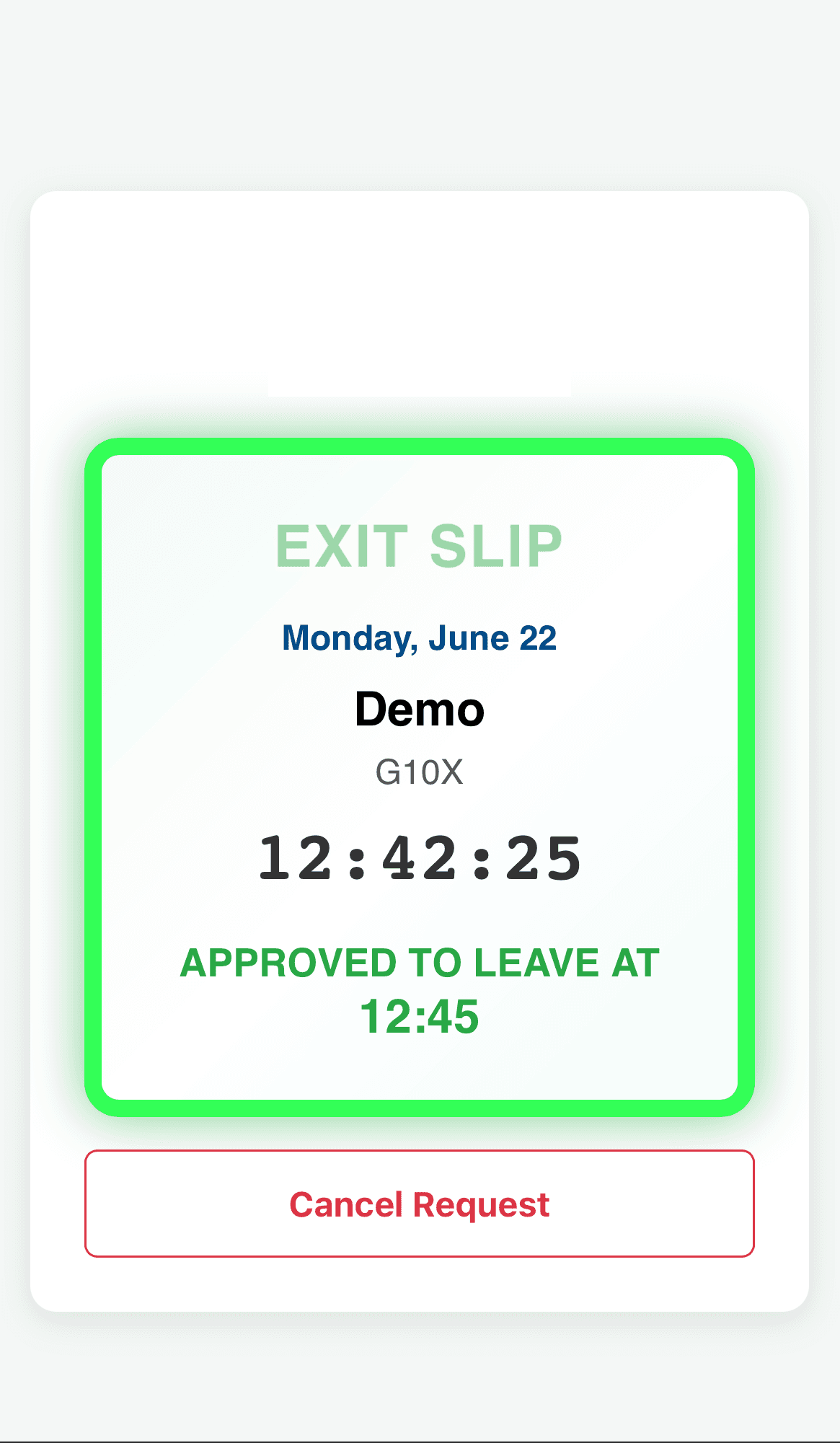
To make this work without turning our school entrance into a rigid checkpoint, I had to solve a very human engineering problem: duplication. I didn't want to implement a heavy policing or surveillance mechanism, so I looked at how global digital payment apps handle security. I designed the final digital pass with a live running clock, a precise timestamp, and subtle animated video elements so it couldn't be screenshotted or faked. By connecting the backend to a live, shared data ledger, our teachers get instant visibility into who is on campus without any extra paperwork. It taught me that we can protect a community's safety through smart design rather than restrictive rules.